Archive for March, 2012

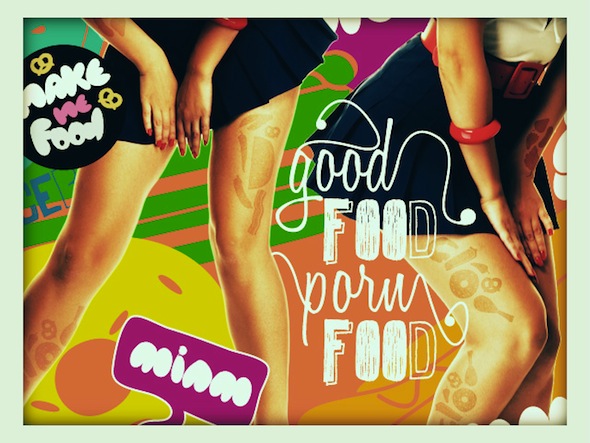
Food Porn, Le culte de la nourriture à l’ère du digital

Mar 29 2012

Depuis quelques années aux Etats-Unis puis en Europe, les termes de « food porn » ou de « foodographie » apparaissent dans notre paysage lexico-culinaire. Décryptage.


Tout d’abord : non, on ne parle pas de pornographie. Le « food porn » n’a aucun lien avec le fait de filmer des individus se roulant dans le stupre sous l’œil des caméras.

Revenons un peu en arrière. La cuisine est avant tout une affaire de transmission, un héritage, le plus souvent familial. Dans les années 70-80, la redéfinition des valeurs sociétales a donné lieu à un déficit de transmission, engendrant des générations privées de cette hérédité gastronomique.

Logiquement, Internet est donc devenu le premier lieu de transfert de savoir culinaire. Les blogs de cuisine, le plus souvent tenus par autodidactes passionnés, se sont multipliés. Certains sont même devenus de mini-célébrités sur la toile. Dans une époque où les métiers de services sont rois, la cuisine, une activité manuelle, est valorisée.


Tout est une question de partage. On associe souvent la cuisine avec l’amour, avec l’affection. Plusieurs moments sont importants dans la cuisine : il y a le moment de la transmission que nous évoquions plus haut, et celui de la création, de l’action. Mais l’instant qu’attendent le plus ceux qui s’échinent derrière les fourneaux, c’est celui du feedback, du commentaire. Cuisiner est une façon de se sentir mis en avant, récompensé. Des émissions comme Top Chef ou Un diner presque parfait ont porté aux nues cette propension au commentaire, voire à la notation. Mais aussi à l’attention portée à l’esthétique dans la cuisine.

Read the rest of this entry »

Emakina adopts Wanabe’s goodwill

Mar 28 2012

Commercial Information – In a business move that advances Emakina’s positioning, the company announced today its purchase of Wanabe’s goodwill. Wanabe is a Belgian-based agency which has enjoyed a strong reputation for its competences in brand activation, use of CRM tools, and building brand loyalty. It has been active in various sectors, such as: automotive, tourism, consumer goods, and retail.


Immediately following this acquisition, the Emakina Group, will offer Wanabe’s clients services from its four core fields of activity, namely: strategic brand management, brand activation, web building and digital applications. Emakina’s nine “Competence Centres” will also be put forward to Wanabe’s existing clients, allowing for the two companies to develop new business synergies.


Brice Le Blévennec, Chief Visionary Officer of Emakina: “This acquisition will reinforce our experience in brand activation and in CRM systems. The current trends towards consumer-focused marketing and the use of social media – become more strategic for our clients. Our newly-enriched service offer is thus now even more unique in our market”. Following the acquisition, Wanabe will be managed by Elsa Nejman and Jonathan Cerneels; who will serve as Managing Director and Managing Partner, respectively.


Finally released for publication: Emakina has won two IAC awards!

Mar 27 2012

It’s not easy, knowing that we were yet again winners of such distinguished prizes, and to have to remain silent about it… But now that the organisers of the Internet Advertising Competition (IAC) gave us their OK, we can proudly announce: we did it; Emakina won two IACs this year!

Our first prize was for the “Test-Achats 50 Avocats ” campaign, under the Best Magazine Online category. The original campaign was supported by social media activities and a viral clip on protecting consumer rights. It generated a record number of citizens engaging with the organisation, thus making it more relevant than ever before.

We also won the Outstanding Website award for Belgium Rollers’s new home page, designed by Emakina. Thanks to its original funky characters and marvelous design, the website presents to its visitors the fun urban universe in the Roller Parade spirit. All that’s left is scrolling and clicking around this dynamic website in order to learn about the event!


Emakina is the brain behind the Clinique “3 Step Coach” campaign

Mar 26 2012

Clinique, the American cosmetics brand, famous for its allergy-tested products, has decided to engage with its clients differently. Its recent campaign, titled “3 Step coach”, uses a specially designated online platform for this purpose.  Clinique invites users to register as “coaches” on a Facebook Connect application, designed and developed by Emakina. Once registered, the challenge is on. Their goal is to invite as many friends as possible, and then share information on Clinique products as well as their personal experiences with them. Coaches are awarded with “badges” for each successful invitation or item they advertise. They become official “ambassadors”, after having collected a total of seven badges.


During the course of one year, all ambassadors receive Clinique products, corresponding with the experiences they write about. They are also treated with a personal coaching session, offered by an official Clinique expert. This experience will guide them on how to best match their skin types and needs with the most appropriate Clinique products. Friends of the ambassadors, who follow the activity online, get a VIP treatment as well! They each receive a three months products supply and the opportunity to join their ambassador during the one-on-one coaching session.

The “3 Step coach” application is unique in communication on beauty and cosmetics. Clients interact intensely with the brand, and deepen their knowledge of its various products. Furthermore, this campaign, covering 8 different European countries, was adapted to in the various languages of each local market.


Internet change le monde, mais quoi au juste ?

Mar 23 2012

Autour de 2007, le numérique avait réussit cet exploit de se fâcher avec l’écologie et d’apparaître comme une source de gaspis alors qu’il recèle pléthore du contraire. En 2012, va-t’il paraître comme une menace, une source de destruction des emplois et de l’économie, là où d’aucun pense qu’il soit celui d’une nouvelle ère de progrès socio-économique sinon plus ? Tel est l’enjeu d’un débat de fond qui passe relativement inaperçu à mon goût, mais dont je pense que la vibration doit nous réveiller tous.

Il est loin le rapport sur l’économie numérique qui avait bousculé les certitudes de nombreux politiques français il y a un peu plus d’un an, de même que les envolées sur les 232 000 emplois de l’économie Facebook en Europe sont restées dans le microcosme. Pendant que l’on partage des infographies, Courrier International reprend un article long et documenté du New York Times, sur lequel InternetActu a également rebondit et, hier, c’est dans l’Usine Nouvelle que l’on trouve un autre signal sur le même thème.


Le progrès n’est pas une certitude pour tout le monde

Pendant que le microcosme digital se cherche un poids en terme de lobby, que le Conseil National du Numérique ou  Renaissance Numérique tentent de peser un peu plus et de nous sortir de notre petit monde où l’on est si perclus de certitudes que demain sera génial, le reste du monde ne pense pas pareil. Il se dit, donc que le Numérique détruit des marchés et la valeur capitalistique et sociale qui étaient dedans, et ne remplacerait pas numériquement les emplois et les positions perdues. Bref, le numérique où le parangon de la décroissance. En arrière-plan pointe le spectre de la globalisation et de ses méfaits affirmés, la nostalgie d’une France et d’un occident industriel disparaissants, sans parler de ses masses laborieuses. Certains diront qu’on lit cela depuis longtemps. Moi je dis qu’on le lit de plus en plus souvent et sous la plume de journalistes et d’experts influents qui ne viennent pas du monde numérique, et qui sont au contraire les relais d’opinion et d’affirmation de nos convictions qu’il faudrait coaliser au numérique. En clair, ne sommes-nous pas en train de perdre une bataille importante pour faire de l’économie numérique l’opportunité de croissance et de progrès dont nous sommes convaincus ?

Chez Emakina et plus encore pour moi, le militantisme de l’Internet est chevillé au corps. Nous croyons fermement que nous travaillons à changer le monde pour qu’il soit meilleur. Mais je sais aussi que l’échec se nourrit de la certitude d’avoir raisons et que les autres ont tort, que les faits donneront raison quoi qu’il advienne et qu’il ne faut pas lutter. Donc, luttons.

Le numérique est donc sur la sellette. Il a détruit des marchés : c’est un fait. Il est exact qu’il n’y a plus dans nos rues de loueurs de DVD, de développeurs de pellicules photos et j’en passe. J’entend bien le désarroi de commerçants traditionnels qui voient internet comme une menace, constatant que leurs clients leurs préfèrent de l’e-commerce. Et je ne parle pas du front ouvert sur le secteur culturel. Vous avez tous entendu comme moi ce qui s’est dit autour du salon du Livre ces derniers jours et j’espère que l’offensive anti-Amazon à laquelle on a assisté vous a fait lever une oreille. On n’en a que trop peu parlé. Enfin, ce postulat comme quoi le  numérique ne remplace pas les emplois qu’il détruit et que cette économie nous condamne à des sociétés de oisifs sinon de chômeurs s’installe. Vous croyez que je caricature ? Vous devriez vous réveiller.

Read the rest of this entry »

Emakina’s Michaël Totta among Mobile Forum’s keynote speakers

Mar 21 2012

A panel of experts, specialised in developing the “perfect apps”, presented at the Mobile Forum to an audience of marketers and product managers. As eloquently put by the organisers, “mobile applications have become the holy grail of one-on-one marketing”. The event’s aim was thus to put together those behind the best practices in mobile applications. Among the presenters was Emakina’s Head of Digital Applications, Michaël Totta who spoke of ways to turn an iPad into a “lead generation machine”. His comments and insights were greatly appreciated by the audience, who was eager to learn about the great potential of this exciting new medium.


Emakina advancing Europe’s energy efficiency

Mar 16 2012

The European Commission has picked Emakina to promote the importance and benefits of energy efficiency.   An Emakina-produced video clip, released today, illustrates the European Union’s objectives and upcoming regulatory measures in the energy field for the next decade. It also offers viewers concrete and practical ideas on how to reduce their energy consumption. In doing so, the video addresses both private-household consumers and large corporations in presenting future energy saving technologies.

YouTube Preview Image


Click here to view the full version of the video (4’32”).

Are QR codes really the future of marketing?

Mar 15 2012

This question was raised by DM Institute’s journalist, Eric Van Vooren, who met with Brice Le Blévennec for an interview. The following are excerpts, translated from Dutch to English, of the original article, published in the March 9th edition:


QR Codes: you can’t avoid them. You see them popping up everywhere; sometimes very prominent as the roof tiles in the Axa ads, but also on bus stations, product packaging, posters, and even on the backs of city buses.

Are these Quick Response Codes really the modern replacement for the reply coupon or the toll-free 0800 numbers? Are they the missing link between offline and online marketing? We put the question to Brice Le Blévennec, the passionate founder of Emakina, voted by Marketing Media as the leading Digital Marketing Agency in Belgium.
I had barely asked Brice my first question when I was flooded with an avalanche of words. “For me, QR Codes symbolise the stupidity of the agencies! It’s a useless, customer-unfriendly gimmick. First, you already have to own a smartphone. But that’s not all. Smartphones do not come with a standard app to scan QR Codes so the consumer has to also choose to install such an application. Afterwards, she or he has to try to scan a code on the back of a moving bus, or on a billboard three meters high above. You need to capture the code very precisely in the frame with your camera, or the scan will fail. Damn hard.”
“I have conducted a survey with the Emakina staff. We are certainly not representative of the average consumer, because all our employees have a smartphone, but less than 10 per cent have an app installed to scan QR Codes. Using QR Codes for commercial messages shows little respect for the audience. Besides, one is usually limited to printing a code, without any call to action. If you give no clear motivation with the QR Code, why would people go ahead and scan the code? And if you go into the trouble to do so, you often find a generic web page, which adds nothing to the initial message. ”

Sometimes useful
“A QR Code can be useful, for example, in a museum to allow the visitor access to more information, via voice and video, on a specific work of art. That is the proper context. Another example for appropriate use of the QR Codes is the Tesco application for the Metro in Japan. There, the commuter can buy everyday products directly online, by scanning the QR of a specific product from a photo with shopping items on a shop shelf. Then, the QR Code offers a tangible benefit. A QR Code may fit well with certain games or contests. Because you never know what you will get to see, such a code can offer something mysterious. This perfectly fits the atmosphere of certain games.”

A better alternative
“For more traditional marketing applications, there is a much better alternative: the shortened URL. It is now possible to link readers directly via a simple web address in your offline message to a custom landing page. And a shortened URL is easy to remember and can be typed in on any PC or smartphone without the user having to install a separate application. An additional advantage is that the offer can be integrated in the name of the URL so the customer already has an indication of what they will get to see.”

100% connectivity
“The QR Code, however, is in line with a broader, general trend in marketing, that all communication should be interactive. The boundary between direct mailing and other marketing applications is becoming blurred. As a good communication manager, here you particularly have to take into account the uniqueness of each medium. A mobile phone (or smartphone) is a device that people almost always have on them. It stands for 100% connectivity: everybody, everywhere. Not so with a tablet PC. In that sense, the two are complementary devices. Moreover, I expect that the tablet PC, just by its ease of use, will catch on especially with seniors. This is a trend the younger diginatives sometimes overlook. So yes, our profession has a bright future!”.


Xavier Bouillon and Brice Le Blévennec selected for a new exhibition, featuring Belgium’s leading communication figures

Mar 13 2012

Patrick Acken, the renowned photographer of Pub.BE and a one-man institution of commercial advertisement, is working on his first exhibition, presenting some 70 leading figures of Belgium’s communication world. Titled, “Face2Face: A Sample of Belgian communication personalities”, the new exhibition will present extreme close-up photos in black and white of Acken’s communication “dream team”.


Emakina’s Xavier Bouillon and Brice Le Blévennec are among the lucky ones to have their photos presented to visitors of this exceptional artistic initiative. The exhibition will be displayed at Seed Factory starting this Friday, Mars 16th and will remain open until the end of May.


Hoe leuk vinden consumenten de nieuwe Facebook Timeline?

Mar 12 2012

Onderzoeken van onder meer Sodahead en CNet laten zien dat consumenten nog niet echt fan zijn van de nieuwe Facebook Timeline. Ze missen vooral hun oude wall. Op zich niet zo vreemd, want veranderingen doen het nooit echt goed bij het gewoontedier ‘mens’. Maar betekent dit dat merken zich dan niet op de Timeline moeten richten? Nee, natuurlijk. In de eerste plaats omdat dat simpelweg niet kan: vanaf 31 maart gaan alle huidige bedrijfspagina’s automatisch over naar de nieuwe Timeline. En daarom kun je als merk maar beter goed voorbereid zijn, dan afwachten en hopen dat je logo’s nog op hun plek staan na de 31e. Dit artikel helpt je bij de switch.


Goed nieuws
De Facebook Timeline is meer design-georiënteerd  dan de oude wall. Met de grote coverphoto (‘omslag’ in het NL) kun je de pagina veel meer branded maken, zonder met iFrames te hoeven werken. Bovendien zorgt de chronologische structuur ervoor dat je de rijke (soms prille) geschiedenis van je merk visueel aantrekkelijk kunt weergeven. Vooral voor merken die al een tijdje meegaan is dit een fraaie manier om de merkhistorie onder de aandacht te brengen. The New York Times en Manchester United hebben dat al prachtig gedaan, met Timelines die teruggaan tot de 19e eeuw. Waar natuurlijke personen zich vaak druk maken om hun bruisende geschiedenis en de zichtbaarheid ervan, kunnen merken juist veel meer gebruik maken van de hoogtepunten uit de geschiedenis. Zelfs voor jonge merken is dat een ideale manier om te laten zien welke hoogtepunten ze al hebben beleefd. Of wat te denken van een merk als Lätta, dat onlangs opnieuw werd geïntroduceerd: ruimte voor de yuppen uit de jaren ’80 én de nieuwe ‘lekker licht, lekker luchtig’-campagne.

In vergelijking met de oude ‘wall’ is Timeline eenvoudiger bij te houden door het conversation-team: zelfs de stagiaire kan er prima mee over weg. Bovendien kunnen merken nu eindelijk directe privéberichten beantwoorden. En omdat niet elke status-update even boeiend is, kan worden gekozen om 1 bericht vast te ‘pinnen’. Dit verschijnt dan gedurende 7 dagen bovenaan de Timeline. Door een bericht te markeren als ‘hoogtepunt’ (klik op het sterretje in de Timeline) verschijnt het over de hele breedte en zien bezoekers het dus direct als een belangrijker bericht dan de overige updates.

Om strategisch nog beter gebruik te kunnen maken van je bedrijfspagina, is ook het Activiteiten Logboek flink opgefrist. Zo zijn de nieuwe ‘vind ik leuk’s direct te zien en staan de belangrijkste statistieken in een helder grafiekje. De admin-pagina verschijnt boven de eigenlijk pagina, dus met enkel een beetje scrollen, zit je direct op je pagina. Dat is toch net iets makkelijker dan heen en weer klikken.

Geen ‘vind ik leuk’-tab

De grootste klacht tot dusverre is het afschaffen van de tabs, die er voorheen voor zorgden dat bezoekers eerst een oproep kregen te zien om de pagina te ‘liken’ en vervolgens pas door gingen naar het prikbord. Het was misschien wel de meest populaire toepassing van de Facebook-fanpages, die miljoenen mensen lieten klikken om mee te kunnen doen aan een actie. Toch wordt deze toepassing flink overschat. Gemiddeld wordt slechts 10% van het paginabezoek gegenereerd door de standaard welkomsttabs. De rest komt op de pagina door directe links en advertenties em die spelen, hoe niet-verrassend, nog steeds een grote rol bij Timeline.

Hoewel er mensen en bedrijven zijn die er anders over denken, is Facebook in de eerste plaats ontworpen voor individuen en niet als marketingtool. Voor sommige marketeers is dat een lastige uitdaging, die in strijd is met hun merkfilosofie. Desondanks hebben merken ook een persoonlijk verhaal en dankzij de nieuwe Timeline-interface worden merken gedwongen om nog beter na te denken over het verhaal van hun merk om een persoonlijke band op te bouwen met consumenten. Dove weet bijvoorbeeld duizenden vrouwen dagelijks te inspireren met prikkelende vragen, leuke quotes en andere updates, die niet direct sales-driven zijn.

Viraal Facebooken

Je zou kunnen zeggen dat de oude ‘wall’ vooral het ‘aantal-likes’-denken stimuleerde. De nieuwe Timeline is meer een vertrekpunt voor conversaties tussen individuen, in plaats van een eindstation te zijn voor mensen die op ‘like’ hebben geklikt. Marketeers en conversation managers worden geprikkeld om nog meer na te denken in gespreksonderwerpen: welke content wil de consument zien in z’n eigen timeline en welke content gaat ‘ie actief delen? En vooral ook: welke content verleidt voldoende om nog eens naar de bedrijfspagina te kijken?

Facebook begint hiermee nog meer te lijken op de fysieke winkelstraat waar willekeurige passanten altijd een kijkje kunnen nemen in de bedrijfsetalage, maar zelf bepalen of ze wel of niet klant worden. Timeline is natuurlijk niet perfect, want net als bij een echte etalage moet je zelf veel doen om die er zo goed mogelijk uit te laten zien. Maar als je het slim aanpakt, kun je een succesvolle pagina maken. Facebook is groot genoeg om sociaal netwerken net zo wispelturig te laten zijn als het weer, als ze daar zin in hebben. De truc is dat je kijkt en aanpast waar nodig, zodat het niet begint te regenen als je net de ramen van je etalage hebt gezeemd.

Het ‘social-team’ van Emakina is enthousiast over de nieuwe Timeline en ziet volop mogelijkheden voor bedrijven. Ze helpen je graag met al je vragen over Facebook en de nieuwe Timeline. Schroom dus niet om ze te bellen op +31 10 217 15 00  of mailen naar info@emakina.nl

Facebook, c’est géant

Mar 7 2012

Jusqu’à présent, Facebook semblait plus préoccupé de faire évoluer le service du côté des utilisateurs. Les frondes et débats autour de la vie privée ont quelque peu fait oublier que le fond de commerce de Facebook, c’est la pub, et que ceux que cela concerne, ce sont les annonceurs. D’où l’importance d’avoir une attention particulière au flot d’annonces de cette fin février. Elles ont un impact en profondeur au niveau du business model.


Je retiendrai pour ma part 2 paquets d’annonces clés :
  • le changement d’ère sur les pages-fans
  • les annonces sur le mobile
Avec les pages-fans d’avant, il y avait deux problèmes que Facebook corrige selon moi.
Le premier c’est qu’il n’y avait pas de réelle intégration entre le modèle publicitaire de Facebook et le fait d’y être présent avec une page. Avec le nouveau modèle, l’animation de la page-fan est complètement intégré avec le mécanisme de pub et Facebook invite les community managers à travailler une communication ciblée et segmentée vers leurs fans. Ils gagnent au passage le droit d’adresser les amis des fans et ce n’est pas négligeable.

This evening on RTL : Brice Le Blévennec commenting on the new iPad3

Mar 6 2012

Right at this moment, Apple employees are making final preparations for what  will probably be the launching event of the iPad3. The mysterious, yet, very-intriguing event will be held at the Yerba Buena Center in San Francisco, exactly one year after and at the same place the iPad2 was introduced to the world. According to the press invitation, tonight’s event will present the successor of the iPad2, without specifying much information about it, thus leaving a lot of room for speculation. The excitement revolving around the promised product has created quite a buzz throughout the international tech community despite, perhaps because, of its ambiguity.


Final preparations at the Yerba Buena Center in San Francisco


This is why RTL’s web-magazine, “Les Teknophiles” has decided to dedicate tonight’s show to the Apple event, inviting Brice Le Blévennec as a special guest speaker. Brice will share his vision on the way the iPad will soon replace conventional computing, only two decades after the birth of the PC. “Apple is once more writing the book” as he puts it. Further guests on the show include Frédéric Feytons of TappTic, and Bruno Kesteloot, general manager of MacLine. The show will be aired (in French) today, March 7 at 18:45 Brussels time. Click here to watch it live.

Will your customers ‘like’ the new Facebook Timeline?

Mar 6 2012

In short, no. Surveys, published earlier this month by SodaHead and CNet, show that the vast majority of users do not appreciate the new Facebook interface and that they miss their good old Walls.  But this doesn’t mean that brands should refrain from switching to the Facebook Timeline. For a start, they don’t have much choice. As of the end of March, Timeline will become mandatory for all Facebook Pages; so instead of complaining about it, marketers should better yet learn how to make the most out of it. This article will help you prepare to the Timeline tsunami right before it hits your brand!


Let’s start with the good news. With its new ’cover-picture’, Timeline is much more design-oriented, allowing companies to visually express their brand identity, using a logo, a product, or a personality. Moreover, the chronological nature of the Timeline facilitates a very rich presentation of brands’ histories, especially for those that have been out there for quite a while. The ability to dig out some old information made many individual users uncomfortable, yet, on the corporate Page level it has great potential. The New York Times and Manchester United, for example, use Timeline to tell their stories, dating back to the 19th century, in a very compelling way. Even younger brands can still use the Timeline to illustrate their major milestones like launching a new product, issuing stocks, or winning a prize.

In comparison to the old Facebook Wall, Timeline is also much easier to administer, featuring new options to enhance communication with clients. It is now made possible to respond directly to private messages without having to alternate among various pages. In order to distinguish between the various posts, new Timelines features allow ‘pinning’ a post so it remains on top or ’starring’ it for a double-wide appearance. At least as important is the improved Activity Log, featuring analytic tools which allow much more strategic use of social media.

But your marketing strategists are not all going to fall in love with Timeline. They might very well complain and rightfully so. Their biggest concern will be the fact that, unlike Wall Pages, Timeline Pages do not allow setting a customised application as the default landing tab for non-fans. This was an extremely popular feature for promoting special content like coupons or contests. Without this feature it won’t be as easy to reach the same numbers of Likes or email subscriptions. On the other hand, to make things somewhat less gloomy, only 10% of Page traffic is generated by the default landing tabs. The remaining is owed to published links and ads which, of course, still play a central role on Timelines.

Despite what Facebook officials may claim, Timeline was designed for individuals to share their stories; it was not intended to serve as a marketing tool. Certain marketers may see this is a challenge, conflicting with their brand philosophy. Yet, brands too have their life stories to tell. The new Timeline interface will make their stories come through as more personal interactions than the traditional brand-consumer relationships.

The new infrastructure should thus change the way you think of your Facebook Page. Instead of message-board-like Walls, use Timeline as a means of viral communication.  If the Wall’s purpose was to serve as a destination point of as many users as possible, Timeline sees itself as a communication station, from which users can spread ideas by sharing them with their friends.

Think of Facebook as your brand’s online reality. When you decide to have a baby, you know you won’t bring her or him into a perfect world. Yet, you do your best to give your child the best tools to succeed in life. Timeline is no perfect either; in fact, it’s quite far from it. But if you do a good job in preparing your brand to its digital life, chances are it would mature into a popular and successful Page. Facebook is big enough to redefine social networking every time Mark Zuckerberg has a bad hair day. It is up to your strategic planners to adapt and learn how to leverage the new Facebook whim.


Emakina wins its seventh Interactive Media Award in 2011

Mar 5 2012

The Delhaize Dream Job Website, created by Emakina, won the ‘Best in Class’ prize under the ‘Recruitment’ category, in the 2011 competition of the Interactive Media Awards (IMA). This announcement comes shortly after Emakina was bestowed six other awards in this year’s competition. The IMA recognize the highest standards of excellence in website design and development and honour individuals and organizations for their outstanding achievement.

The ‘Best in Class’ award is the highest honour of the competition, representing the very best in planning, execution and overall professionalism. In order to win this award level, the Delhaize website had to successfully pass a comprehensive judging process, achieving very high marks in each of the judging criteria – an achievement only a fraction of sites in the IMA competition earn each year.


The judges utilised a points-based scoring system which allows each entry to receive up to 100 points for each of five criteria, adding up to a maximum of 500 points. By adhering to the specific guidelines and criteria of this system judges were able to maintain the highest degree of fairness, accuracy and integrity; competently and effectively evaluate entries; and, deliver clear results.


Websites receiving an overall score between 460 and 479 receive the Outstanding Achievement award. A score of 480 and above entitles the prestigious ‘Best in Class’ award. Our website scored a total of 489 points (96 on Design, 98 on Content, 100 on Features Functionality, 97 on Usability, and 98 on Standard Compliance & Cross-Browser Capability), making it a ‘Best in Class’ laureate. This is the seventh IMA Emakina wins in 2011 and our 24th IMA since 2008.


Emakina is proud to host the next GTUG Brussels event

Mar 1 2012

What is GTUG? A GTUG (Google Technology User Group) is an informal meetup open to anyone interested in Google’s developer technologies: ranging from Android and App Engine, to product APIs like YouTube.


Programme:

18:30 Welcome
19:30 Using the USB debugger with Chrome and Chrome for Android to debug a mobile webpage on device.
20:00 Open discussion on the past Android Hackathon on Feb 18-19 (GADC).
20:30 Together set up and play with a Google TV
21:00 Massive peer hands-on hack: add 1 feature into one of the apps done at the hackathon. No preparation required.
22:00 End – Information about upcoming events in March-April

If you want to attend this meetup, feel free to register here


Where? Emakina, Rue de Middelbourg 64A, 1170 Watermael-Boitsfort

When? Thursday, 8th of March, starting at 18:30